
This year’s Romanian presidential election was more than just a political contest—it was a turning point in the country’s democratic journey, and a clear message to Europe and the world about the values Romanians want to uphold. After months of political uncertainty and electoral controversy, voters headed back to the polls this past weekend for a historic re-election that would redefine the country’s path forward.
2024 Election
The 2024 Romanian presidential election was marked by significant controversy and ultimately annulled due to concerns over electoral integrity. The Constitutional Court of Romania invalidated the election results on December 6, 2024, citing multiple violations, including undeclared campaign financing and alleged foreign interference, particularly from Russia. One of the leading candidates, Călin Georgescu, was found to have received substantial undeclared donations, contradicting his claim of a zero-budget campaign. Additionally, there were reports of Russian cyberattacks targeting Romanian electoral systems, raising further doubts about the election’s legitimacy. The annulment led to widespread public protests and political unrest, highlighting the nation’s struggle with maintaining democratic processes amid external and internal challenges.
Centrist vs. Nationalist
In a dramatic runoff, independent candidate Nicușor Dan, the reform-minded mayor of Bucharest, faced off against George Simion, the charismatic but controversial leader of the far-right AUR party. Simion had surged ahead in the first round, riding a wave of nationalist sentiment and discontent with the political elite. But as the second round approached, Dan managed to unify centrist and moderate forces, positioning himself as the stable, pro-European alternative.
The contrast couldn’t have been clearer: one candidate promised upheaval and “reclaiming Romania,” while the other offered institutional reform, EU alignment, and a voice of reason and stability.
The Verdict: Stability Over Extremism
When the votes were counted, Nicușor Dan emerged victorious with 53.6% of the vote—a remarkable comeback from his initial second-place showing. Simion, despite strong support among the Romanian diaspora, particularly in countries like Spain, fell short of victory. Dan’s win was seen by many as a resounding endorsement of democracy, moderation, and Romania’s place within the European Union.
The result also challenges a wider European trend, where far-right and populist movements have been gaining ground. Romania, it seems, chose a different path.
What’s Next for Romania?
Dan now faces the monumental task of rebuilding trust in government, stabilizing the political landscape, and delivering on his promises of reform. The resignation of Prime Minister Marcel Ciolacu and the appointment of interim Prime Minister Cătălin Predoiu add to the pressure for a unified, effective administration.
But there is reason for optimism. This election demonstrated the strength of Romania’s democratic foundations. If Dan can navigate the complex political terrain ahead, he has the opportunity to lead Romania into a more transparent, inclusive, and resilient future.
Final Thoughts
Romania’s 2025 presidential election wasn’t just about choosing a leader—it was about reclaiming a democratic voice. In the face of foreign interference, political scandals, and rising extremism, Romanian voters showed up with a clear message: they want a future grounded in integrity, dialogue, and a place in the heart of Europe.
From a personal perspective, Romania’s presidential election was a powerful reminder that democracy, even under strain, can still inspire hope. In the days leading up to the vote, the atmosphere in Timișoara, a city rich with historical significance, was noticeably subdued. The tension was palpable: restaurants in the city center had stopped serving alcohol, in anticipation of demonstrations following the results. Yet, beneath the quiet streets and cautious mood, there was a deep, collective sense of purpose. What struck me most was the determination of the people, how seriously they approached their civic duty, how deliberately they made their way to the polls. There was no apathy here. Instead, there was unity, a shared belief that this election mattered, not just for the moment, but for the generations to come.
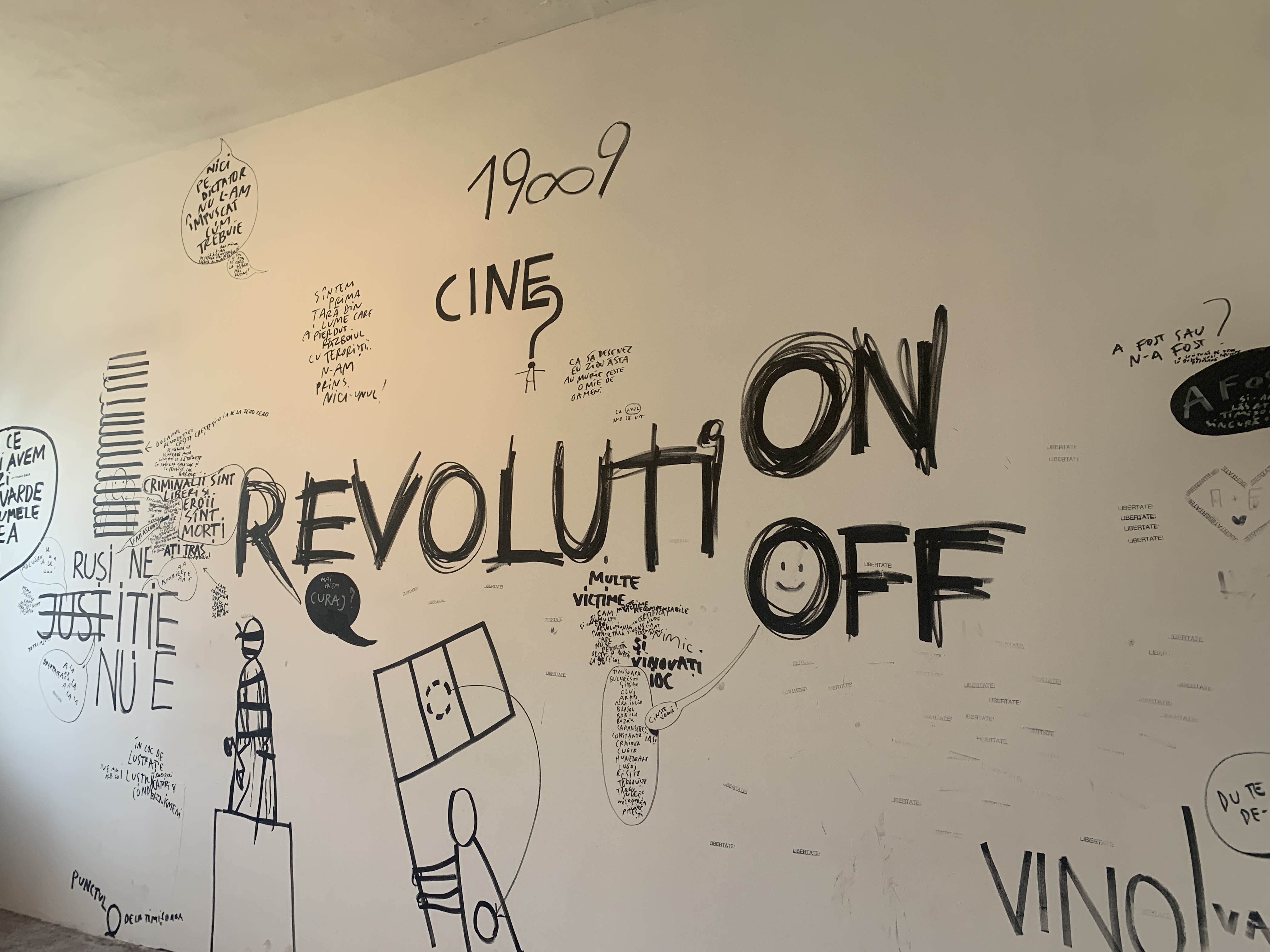
As someone living through intense political polarization in the United States, witnessing this moment in Romania felt deeply meaningful. It was not lost on me that just months earlier, the country had commemorated the 35th anniversary of the 1989 Revolution, a turning point that brought an end to decades of dictatorship. That history is still alive in people’s minds and hearts, it shapes how they vote, why they protest, and what they hope for. To see that legacy honored through peaceful, determined participation in democracy was both moving and humbling. Romania reminded me that change is possible, that vigilance matters, and that hope often shows up quietly—one ballot at a time.


 Run. Sip. Serve.
Leave a comment