
In my last blog post, I briefly touched on how hot it has been in Romania. Over the weekend, we seemed to have a bit of a break in the temperature, but this week we are seeing more rising and blistering temperatures, not only here in Romania, but all across Europe. Cities from Lisbon to Berlin are recording some of the hottest June temperatures ever observed. With thermometers soaring past 46 °C/114 °F in parts of Portugal and Spain, and health alerts issued across Italy, France, and Greece, this early-summer inferno is no longer just a seasonal anomaly—it’s a stark reminder of how climate change is reshaping the rhythms of daily life. From overwhelmed hospitals to growing wildfire risks, the continent is bracing not just for record heat, but for the deep and lasting impacts of a warming world.
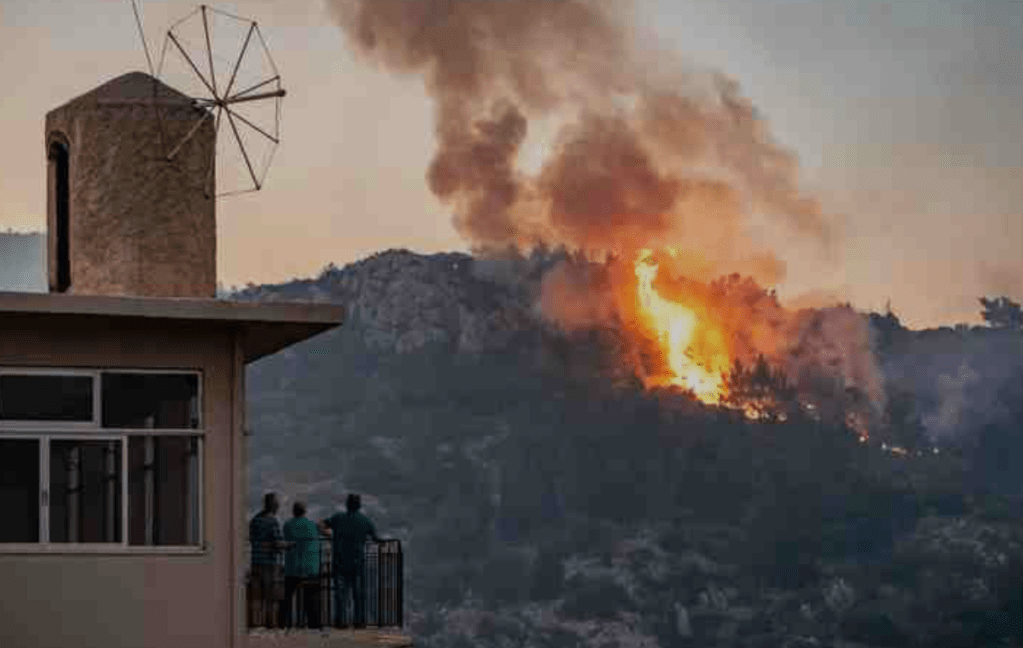
Right now Europe is battling intense wildfires fueled by the record heat and dry conditions, with Greece among the hardest hit. On the island of Chios, massive fires have burned tens of thousands of hectares and forced large-scale evacuations, while near Athens, another major blaze is actively threatening communities. Across the continent, nearly triple the usual land area has burned so far this year. In response, the EU has deployed hundreds of firefighters and aerial support to high-risk areas, but experts warn that long-term resilience requires more focus on prevention and forest management as fire seasons grow longer and more severe.

I admit, I was not adequately prepared for the heat and especially the humidity here. I’m not exactly sure what I was expecting, but arriving in winter meant I mainly packed for cold weather. Still, I’ve been joking that the humidity here has had me sweating nonstop since February. For context, I have been living in Bend, Oregon for 3 years and Bend is considered the high desert which means we experience sunny days, cool nights, and low humidity. While it can reach 40 °C/ 104 °F, we will almost always get a respite in the evenings when it cools down. In Timişoara, the heat and humidity are especially relentless, with the air feeling heavy and stagnant. Even when it rains, the moisture only intensifies the humidity instead of providing any real relief.
In student housing, we do not have air conditioning, like much of the continent. Air conditioning has never been widespread in Europe, largely due to historically mild summers, high energy costs, and older buildings that are hard to retrofit. Many Europeans have long preferred traditional cooling methods such as shutters and ventilation, and view A/C as wasteful. Governments have even imposed limits—like Spain’s rule to keep public A/C no lower than 26°C/80°F. In dense cities, A/C can worsen the urban heat island effect by pumping heat back into the streets. Researchers say doubling A/C use in Paris could raise outdoor temperatures by up to 4°F. In Romania, air conditioning is becoming a more common feature in homes, particularly in urban areas. Approximately 32% of Romanian households are equipped with at least one air conditioner. However, this means that over half of the urban population still lacks air conditioning. Still, as heatwaves grow more intense, demand for cooling is rising.
I’ve had to get creative to cope with the heat, especially at night when it disrupts my sleep. I invested in a few loose, flowy dresses to avoid the discomfort of wearing pants in the humidity. I also bought a small desk fan for my dorm room to keep the air circulating. Taking cool showers before bed helps lower my body temperature, and sitting in front of the fan afterward feels refreshing. When things get really unbearable, I resort to placing ice cubes on the back of my neck and chest to help cool down. Back home in the U.S., I’d just turn on the A/C and call it a day, but facing multiple heatwaves here in Europe has truly tested, and strengthened, my resilience and adaptability.
The current heatwave sweeping across Europe, including Romania, is more than just a temporary weather event—it’s a clear sign of a changing climate. As summers grow hotter and longer, extreme heat and humidity are becoming the new normal, challenging public health, infrastructure, and daily life. Romania’s struggle with rising temperatures, coupled with Europe’s broader climate shifts, underscores the urgent need for comprehensive strategies to mitigate the impacts of global warming. Tackling this crisis requires not only adapting to increasingly severe heatwaves but also coming together through collective action to slow global warming—because only by working as a community can we prevent these extremes from becoming even more frequent and severe.
 Run. Sip. Serve.
Leave a comment