
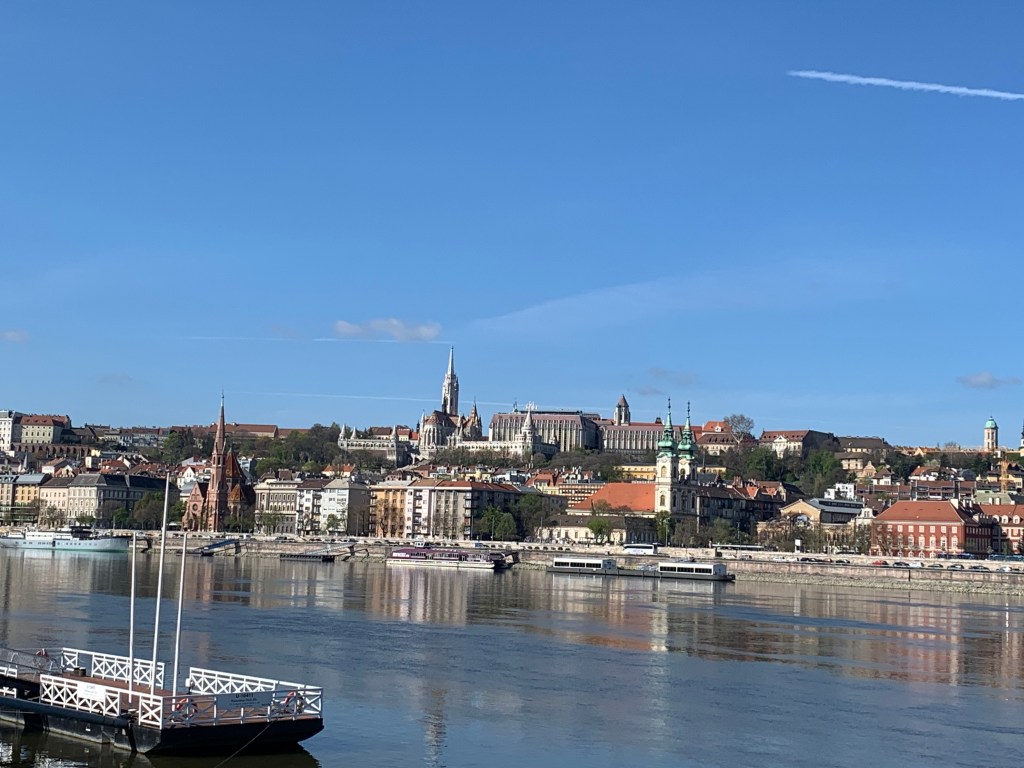
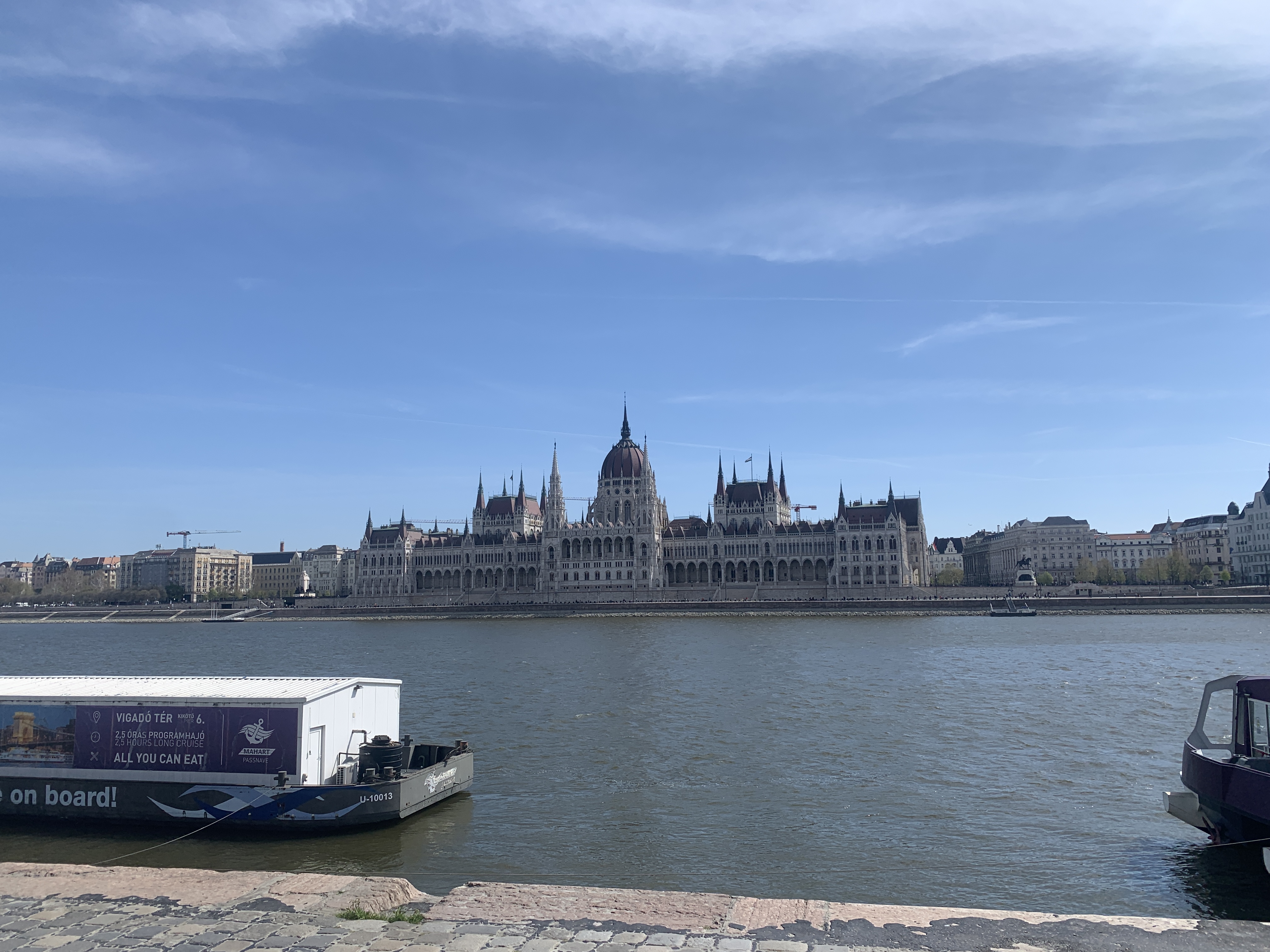
Budapest is unlike any city I have ever run. There are no bad views in Budapest. The architecture is simply stunning and there is a surprising amount of green space. Budapest is divided by the Danube River, and it’s made up of two main parts: Buda, with its hills and castles, and Pest, the flat, lively heart of the city filled with cafes and nightlife. Budapest is often called the “Paris of the East” for its romantic atmosphere, grand boulevards, and glowing lights at night. The city is very runnable and bike-able, especially along and around the river. It was the perfect city to choose to run a race.
lots of options
The pre-race communication was extremely organized as the race has entered its 40th year. There were several distances to choose from: the 7km held on Saturday and the 21km or 10km held on Sunday. You also had the option of doing the 21km as part of a two or three person relay team. There was a distance for everyone.
Packet pickup had multiple options to choose from as well. The race and packet pickup was held on Margaret Island, a green oasis located in the middle of the Danube River between Buda and Pest. Spanning about 2.5 kilometers, it’s a popular spot for walking, running, and cycling. You could pick up your bib and shirt on Friday, Saturday, or race morning, Sunday. I really appreciated the option to register the morning of the race—since I was traveling and hoping to fit in some sightseeing, it was nice not to make an extra trip to the island unless it was absolutely necessary.
holy amenities batman
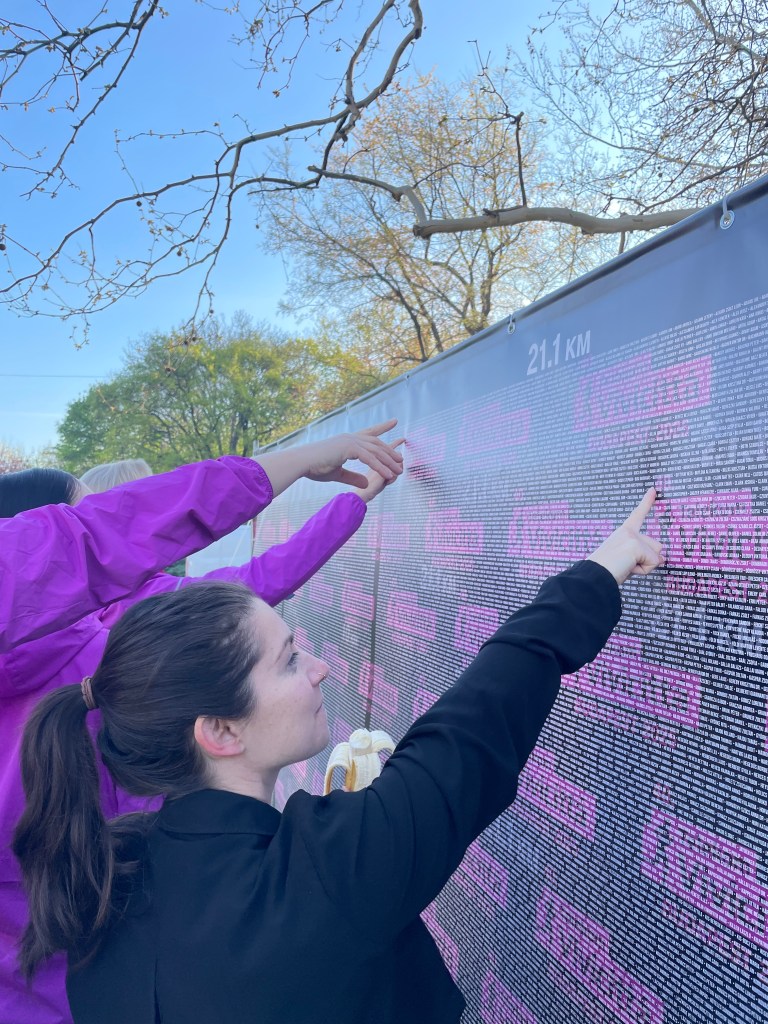
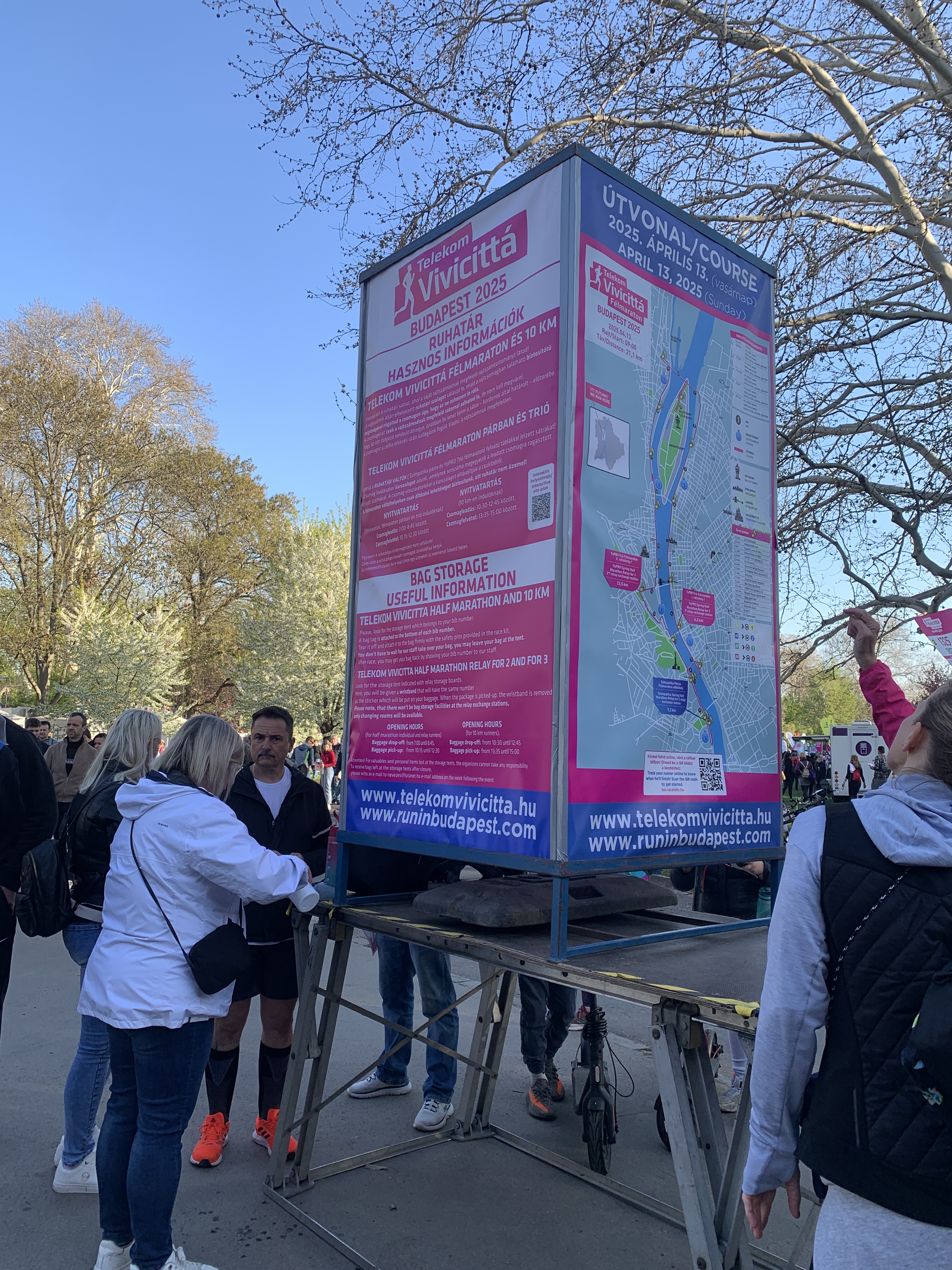
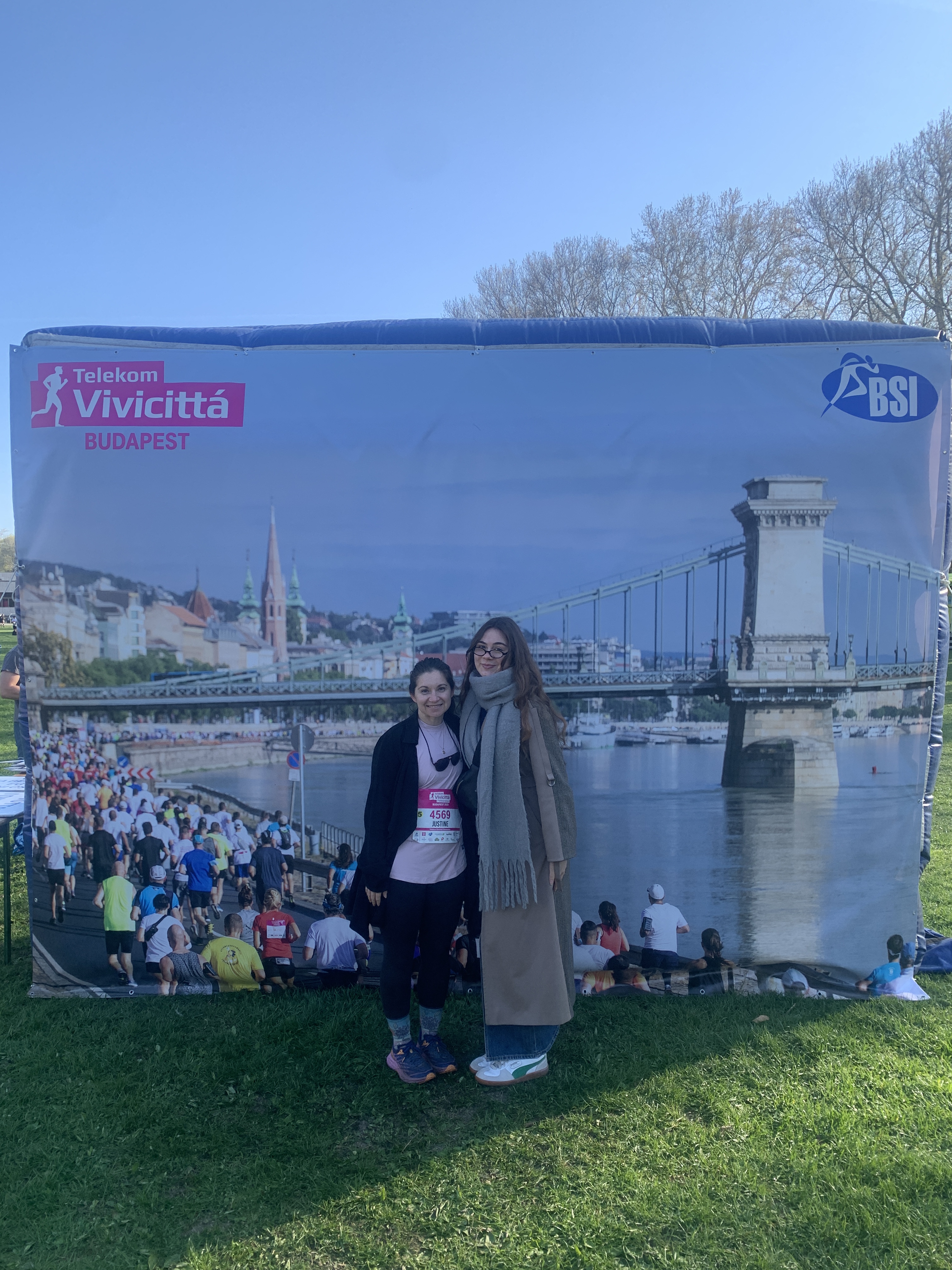
On race day, my warm-up was a leisurely two-mile walk to Margaret Island. Once I arrived, I headed straight to the water tower to pick up my race number and shirt. All I needed was the bib number from my confirmation email, and the process was quick and easy. I was genuinely impressed by how well-organized everything was—and by how many amenities were available for runners. The event area felt like a small village, complete with tents, vendors, and a festive atmosphere. Large signs displayed clear directions and the course map, and one especially fun touch was a massive board listing all the participants’ names—it was a great moment trying to spot mine among thousands of others.
They had a lot of portable toilets available and bathrooms inside the water tower for changing as well. Another amenity I never have seen before at a race were showers available to the runners post-race. If you were traveling back the same day and didn’t have access to a hotel or gym, that’s an impressive feature to offer.
Among the vendors, there was a coffee cart available for coffee and espresso drinks for purchase. I absolutely purchased a pre-race cappuccino for an additional caffeine hit. There were multiple foods carts, with one having a number of pastries to choose from. I didn’t opt for a pastry, as I am not a huge breakfast or pre-run meal eater, so I was fine with my banana. If I was running a longer distance, I would have chosen a larger pre-race meal, but for a half marathon, I know I would be fine with a light snack prior to the race.
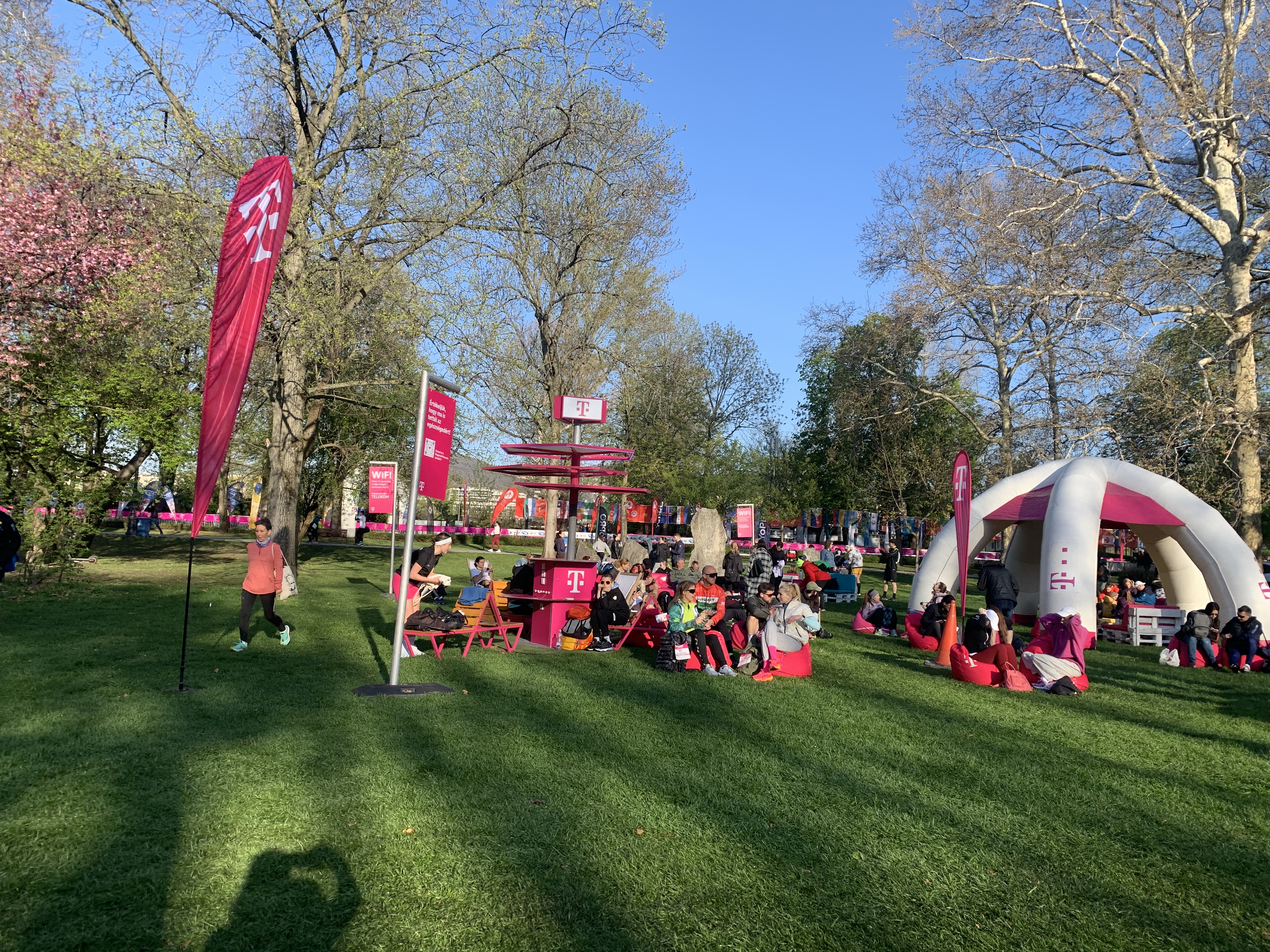
One major highlight was a lounge-style area sponsored by T-Mobile, complete with free Wi-Fi and power outlets. I was seriously impressed—this is a game-changer for supporters who often have to wait around at the start/finish area. While Margaret Island is centrally located, it’s still a bit of a walk from nearby cafes and hotels, so having a comfortable spot to recharge (literally and figuratively) was a thoughtful touch. For friends and family who didn’t want to trek back into the city or navigate public transport, it offered a perfect place to relax, stay connected, and avoid the dreaded low-battery panic.



on course
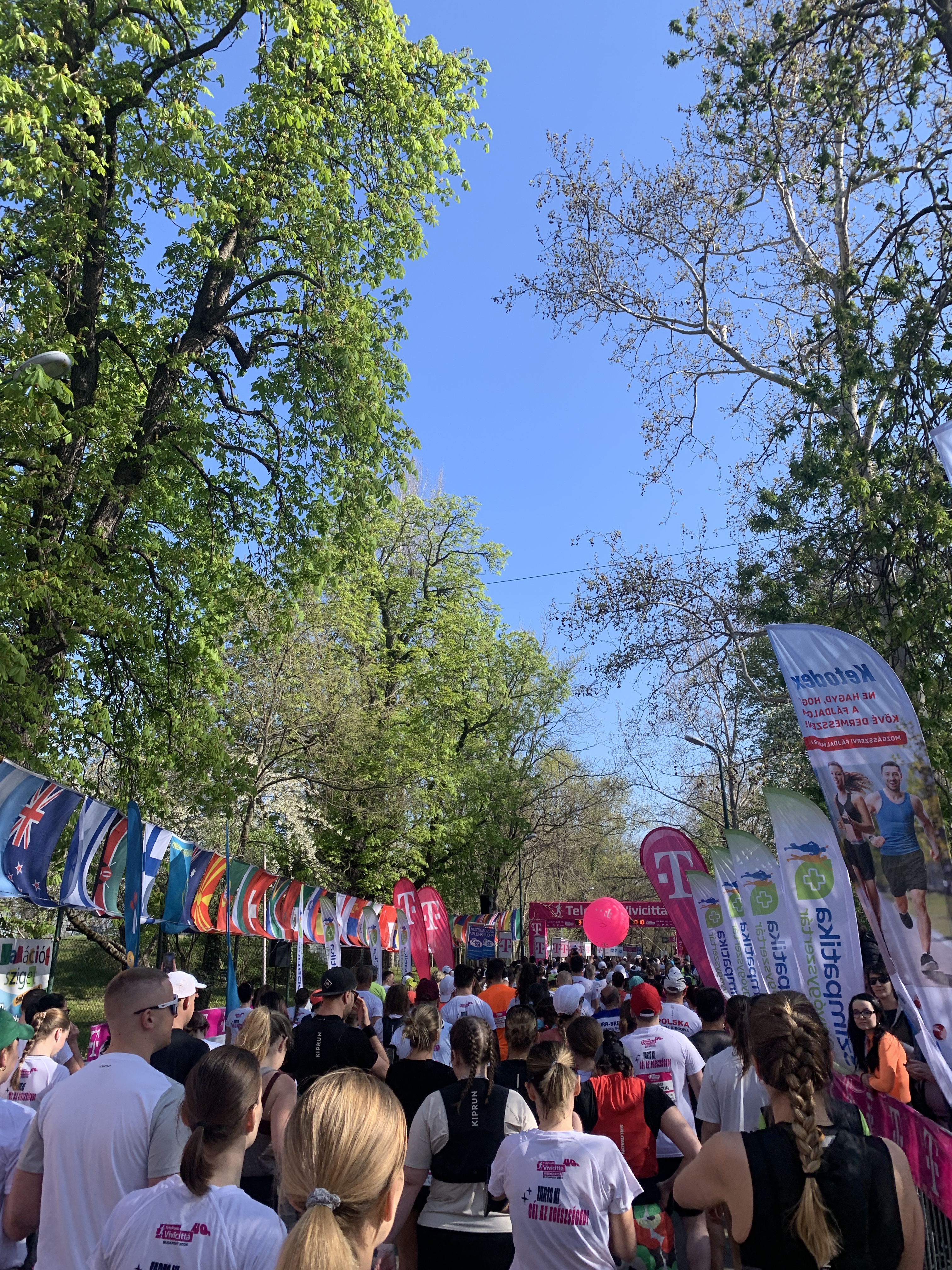
There was a record of over 30,000 participants over the race weekend this year and over 100 countries represented. Which meant for crowded start line corrals. They had someone at each corral checking to see if you were in your designated corral before allowing you to line up for the start. Since I am a mid-pack runner and usually honest with my projected race time, I was positioned further back. I had to wait about 15 minutes to cross the start line, which is probably the average amount of time for a larger city race.
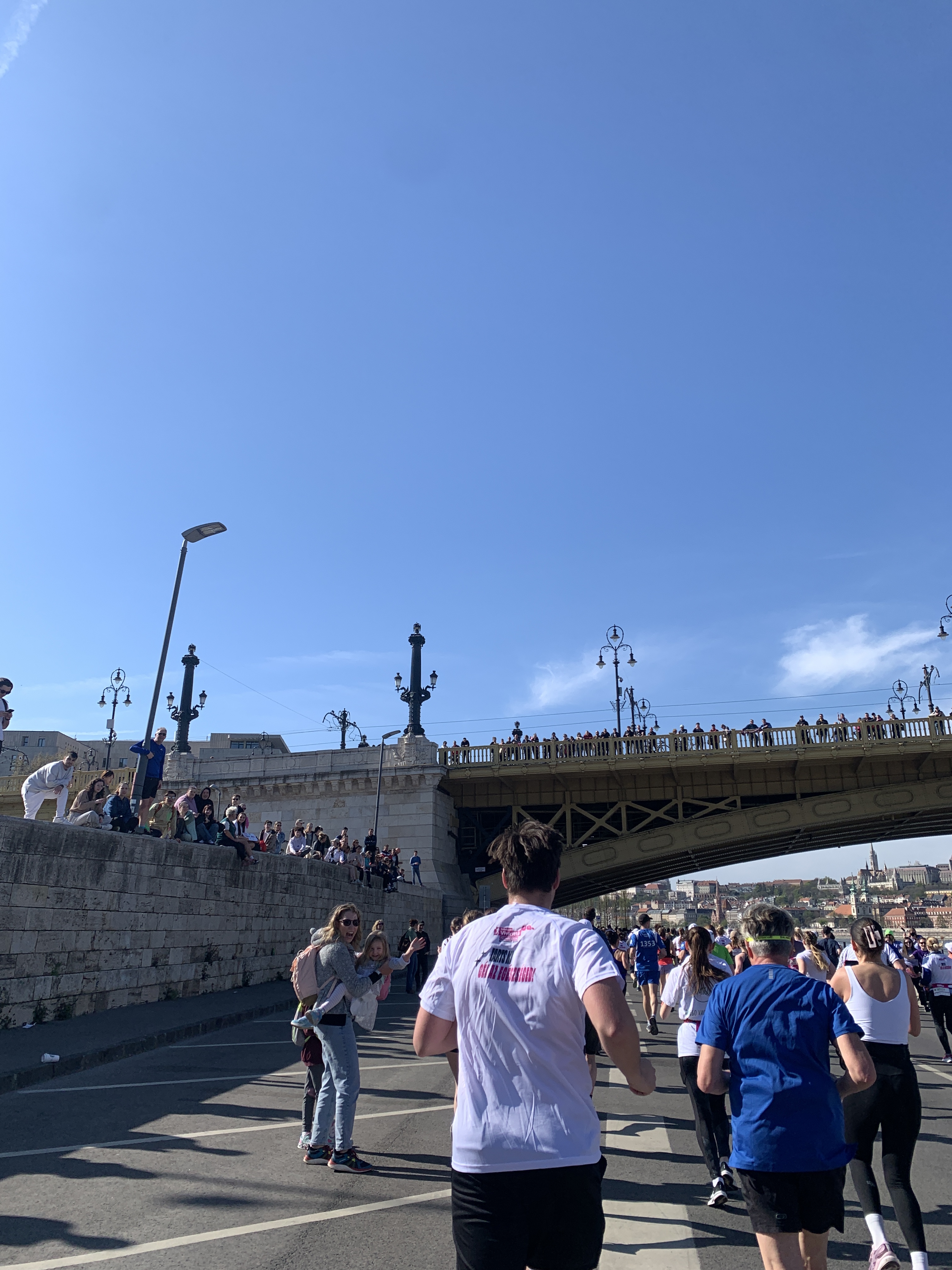
The atmosphere on the course was energizing, with spectators lining nearly every street. In Budapest, a few major bridges span the city, and it was incredible to see people gathered on them, cheering runners on from above. Every few kilometers, there was entertainment to keep spirits high, along with well-placed water stations. However, I was honestly disappointed with the on-course nutrition. The only options available were bananas and salt tablets—not ideal for a longer race. While water and electrolytes were provided for hydration, a bit more variety in fuel options would have gone a long way. After several miles, especially if you’re dealing with any stomach issues, it really helps to have alternatives.
As I still had a lingering cold from my Brussels trip the prior week, my pace was a bit slower. I also stopped more frequently to take pictures of the views. I used to be a lot more focused on my pace when I was in my twenties, but now approaching the end of my thirties, I have found more space in my running to stop and enjoy the scenery. I’m thankful I am still capable of just jumping in to a half marathon without that much training and getting to explore new cities and countries.
trapped at the finish
As well-organized and impressive as the race start was, the finish line experience was a stark contrast—chaotic and congested. There was a major bottleneck trying to re-enter the race village, with runners coming to a complete standstill. I haven’t participated in a large city race like this in a while, so I don’t recall this being the norm, but this was the first time I truly felt stuck in a crowd with no way out. After running, the last thing I wanted was to stand around just to access water or exit the area. It took about 15–20 minutes of inching forward before we were finally funneled into a large tented area where we received a generously sized bottle of water, a snack bag packed with goodies, and finally, our race medal. The post-race provisions were thoughtful and plentiful, which did help make up for the frustrating delay.
Back at the race village after the finish, there were additional amenities available, including massage services and a station for medal engraving. I’m not sure if these came with an extra cost, but for those who missed the on-site engraving, there was also the option to order a personalized medal insert online for €12.
My roommate came to cheer me on and at least we were able to meet each other with ease in the midst of the thousands of others who were also there. Thankfully, Margaret Island is very spacious so after leaving the general area of the race village, the crowd quickly dispersed. She greeted me with a huge cookie and coffee and that was the best post-race snack!
the takeaway
I finished the race in 2:24, which was 7 minutes slower than my previous half-marathon. I do not get caught up on time, although I am happy these days with anything faster than 2:30, especially if I haven’t been seriously training.
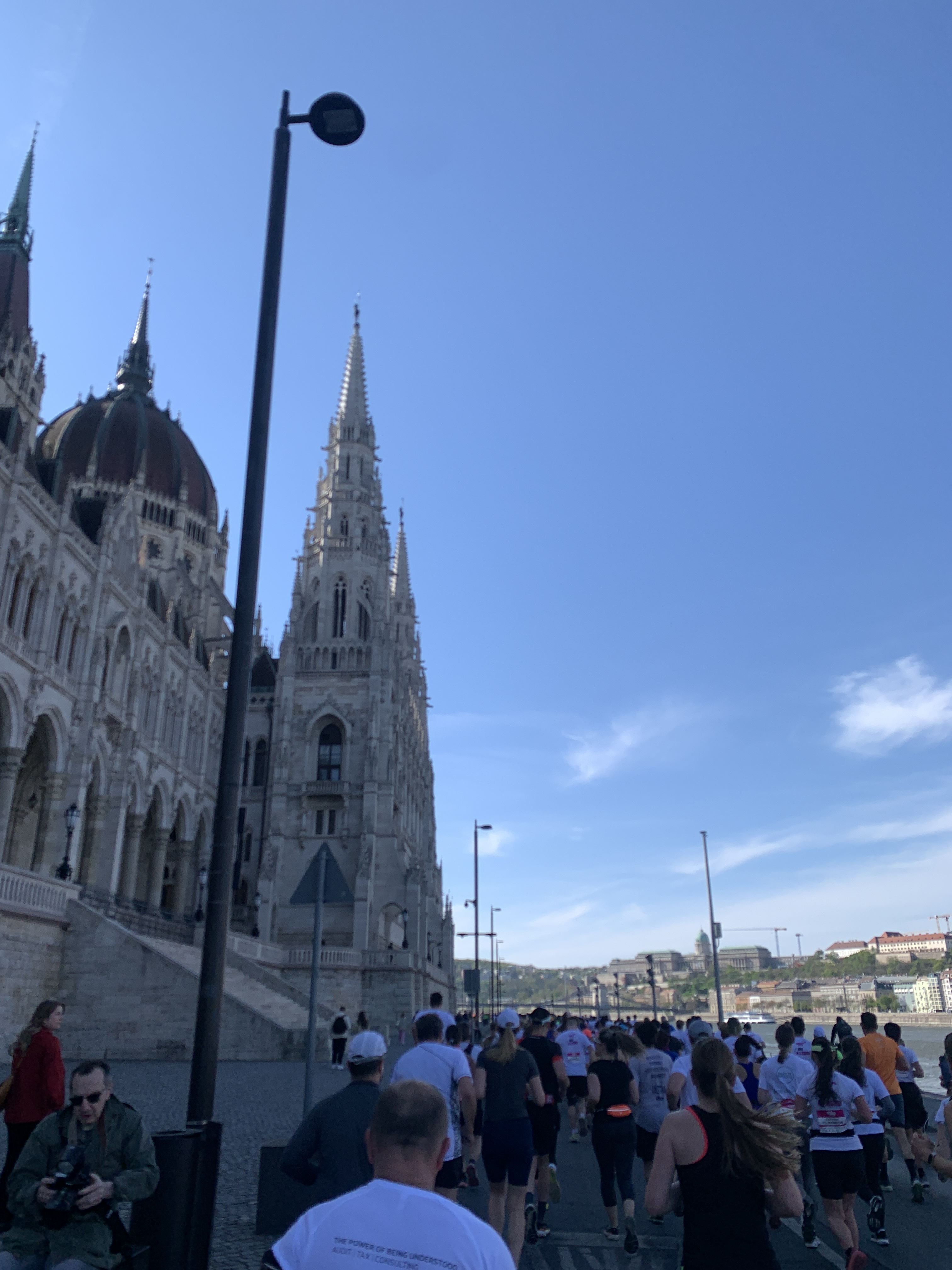
This race was truly one of the most beautiful I’ve ever experienced. Around every corner, there was something new to take in—from historic architecture and sweeping river views to vibrant neighborhoods and cheering spectators. The energy from the crowds and the live entertainment along the course lifted my spirits during tough moments and kept me moving forward with a smile.
What stood out most, though, wasn’t just the scenery—it was the feeling of connection. Exploring a new city on foot through a race gives you such a unique, immersive glimpse into its culture. You’re not just passing through; you’re participating in something shared and local. The hospitality of the volunteers, the kindness of strangers, and the overall sense of community reminded me why I love this sport so much.
It’s experiences like this that inspire me to continue giving back to the running world. Whether it’s through volunteering, cheering from the sidelines, or helping fellow runners, there’s something truly special about being part of a community that lifts each other up—one mile at a time.

 Run. Sip. Serve.