
Yesterday, I celebrated my first Romanian tradition: Mărțișor. This is celebrated on March 1st and the term “mărțișor” is derived from “Martie,” which means March in Romanian. This celebration is deeply rooted in mythology and local customs, blending elements of folklore, the changing seasons, and cultural identity.
The Tradition:
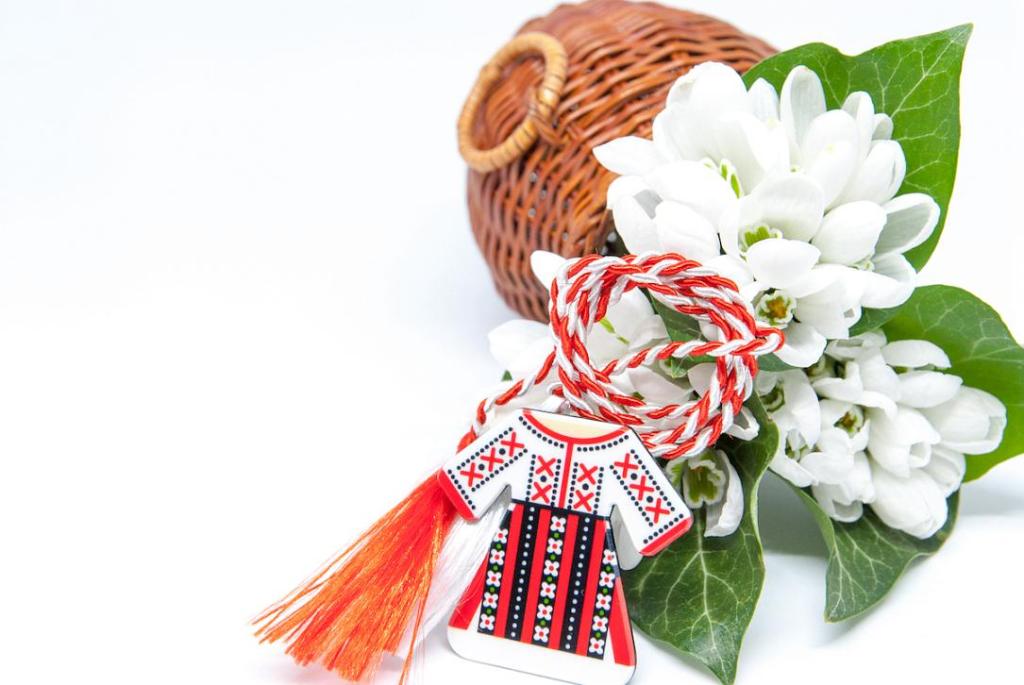
The central aspect of Mărțișor involves the giving and wearing of small trinkets or charms called “mărțișoare.” These mărțișoare are typically made of red and white threads, symbolizing the duality of life—the white representing purity, health, and hope, while the red signifies strength, love, and vitality. The threads are often tied to a small decorative object, such as a flower, a small figurine, or a piece of jewelry.
On March 1st, it is customary for men to give mărțișoare to women as a gesture of appreciation and goodwill. Women then wear these tokens throughout March, often pinned to their clothes, to attract health and happiness as they welcome the new season. In some regions, it is also customary for people to tie the mărțișoare to trees, often fruit trees, to ensure a bountiful harvest.
The Myth:
The myth surrounding Mărțișor varies across regions but generally revolves around the themes of rebirth and the triumph of life over winter. One popular legend involves the character of Baba Dochia, an ancient figure who symbolizes winter and the transition to spring. According to the myth, Baba Dochia has a number of sheep and is known for her stubbornness. As the weather changes and spring approaches, she decides to take her sheep to the mountains. However, she falls into a trap of pride by wearing too many layers of winter clothing. Each day, as the weather warms up, she sheds a layer, symbolizing the gradual departure of winter.
Eventually, Baba Dochia’s journey leads to her transformation and demise as she turns to stone, allowing spring to fully arrive. This tale signifies the transition from winter to spring and the rejuvenating power of the new season, which is celebrated through the Mărțișor tradition.
This is just one of the many myths surrounding Mărțișor. I also heard another legend: the Sun, transformed into a young man, descended upon a village, only to be captured and imprisoned by an evil dragon. Fearful of confronting the dragon, the villagers remained silent—until one brave young man ventured into the dragon’s castle and fought against the beast. After a fierce battle, he emerged victorious, freeing the Sun and restoring joy to nature. However, the valiant hero did not live to bask in the warmth of spring; his blood spilled upon the snow, a testament to his sacrifice. In remembrance of his bravery, young people began to weave together two threads, red and white, and present them to their loved ones as a symbol of love and resilience.
Mărțișor is not only a celebration of spring but also a way to foster social connections and express love and admiration. The tradition emphasizes the importance of community, friendship, and familial bonds, showcasing values that remain integral to Romanian culture.
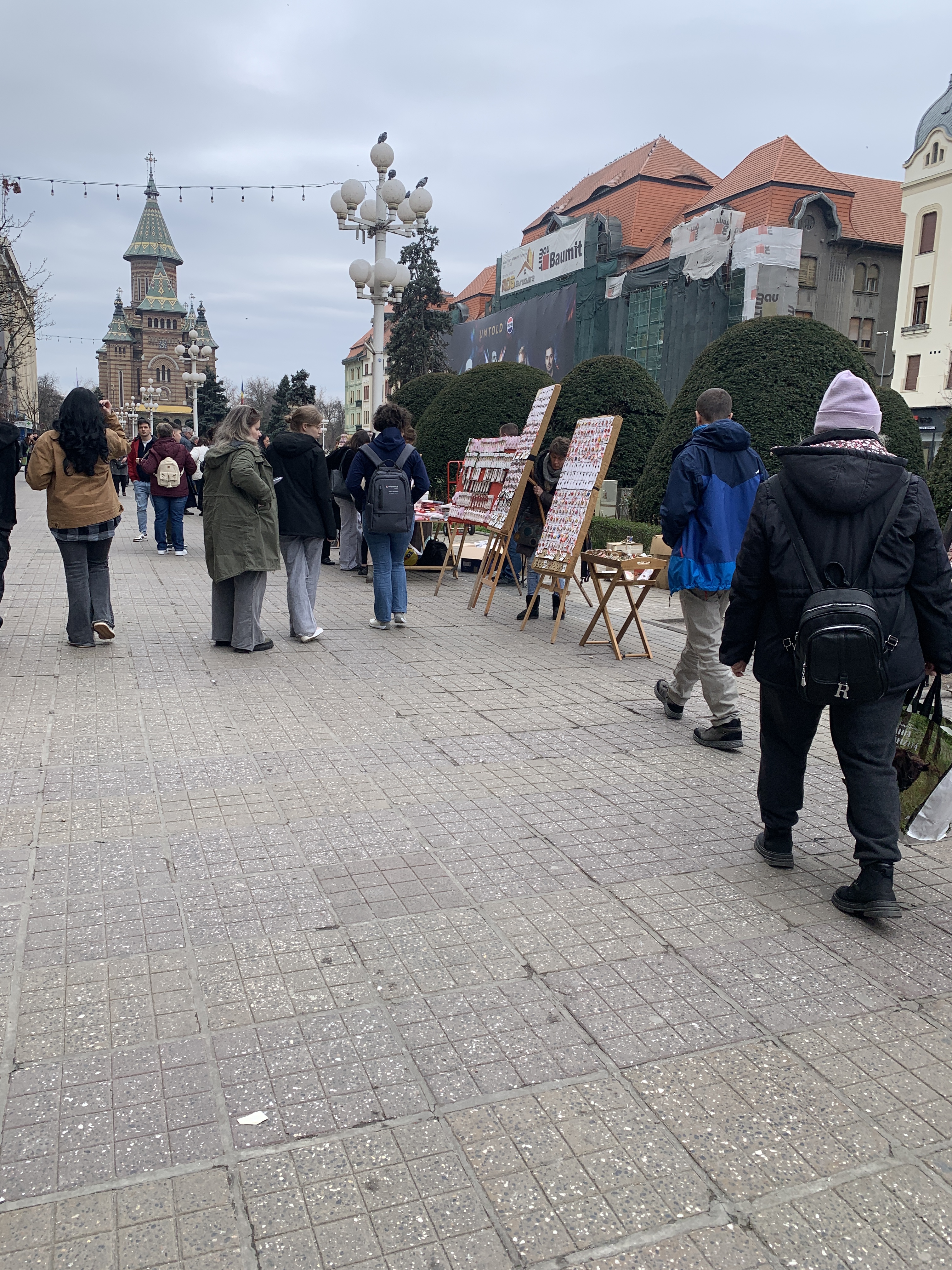
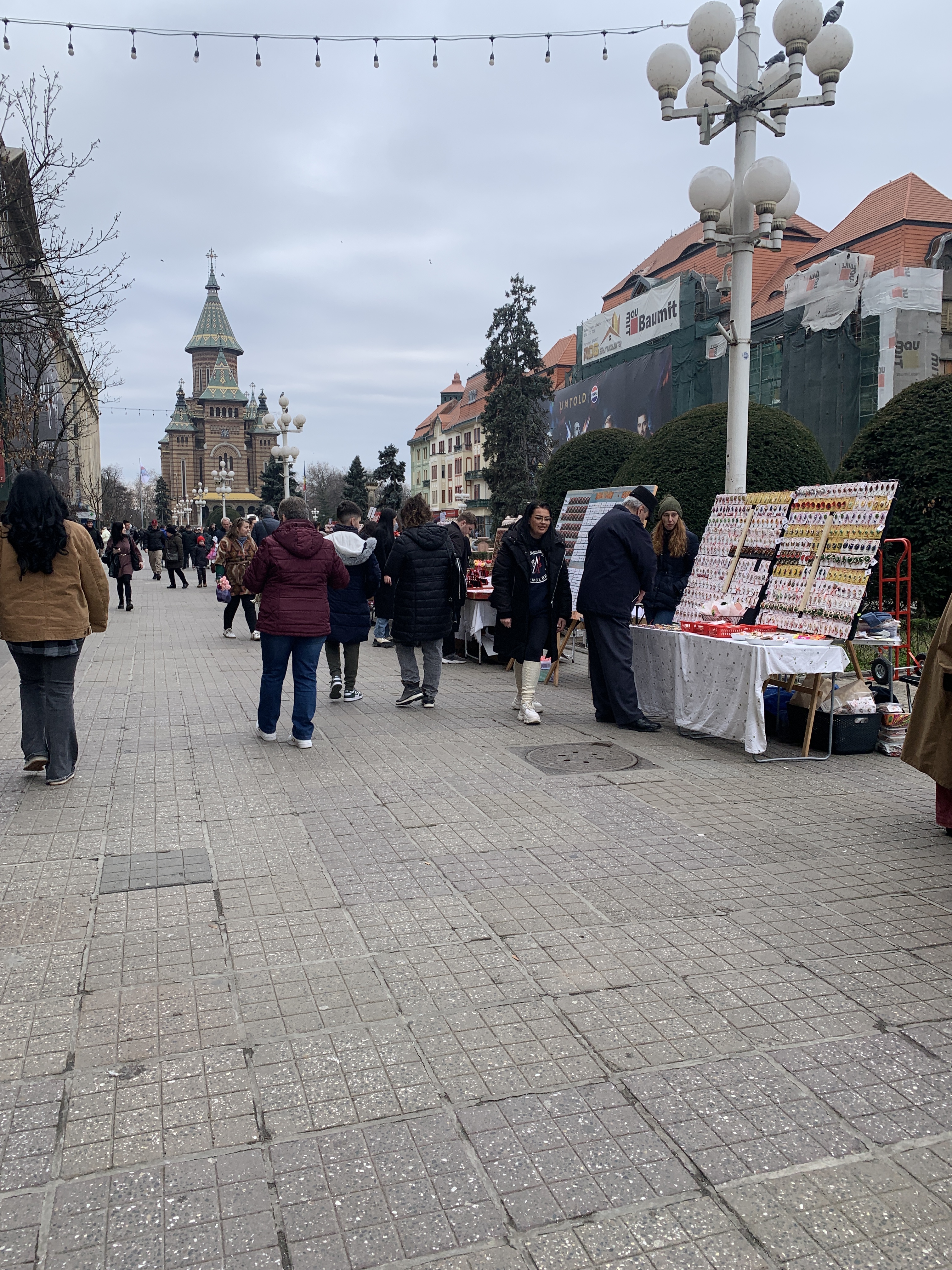

Yesterday, I fully embraced the Romanian tradition by venturing out to buy several mărțișoare from local vendors. This week, vendors have set up stalls in the squares of Timișoara in anticipation of Mărțișor. I discovered that these small trinkets can take many forms, often featuring symbols of spring like tulips and shamrocks, with some being quite intricately crafted. They can be worn as bracelets or pinned to clothing. Naturally, I was drawn to those adorned with cats and dogs, given my obsession with my dog and cat. I ended up purchasing the sweetest pink felt cat, and the proceeds from my purchase went to support a local animal shelter.
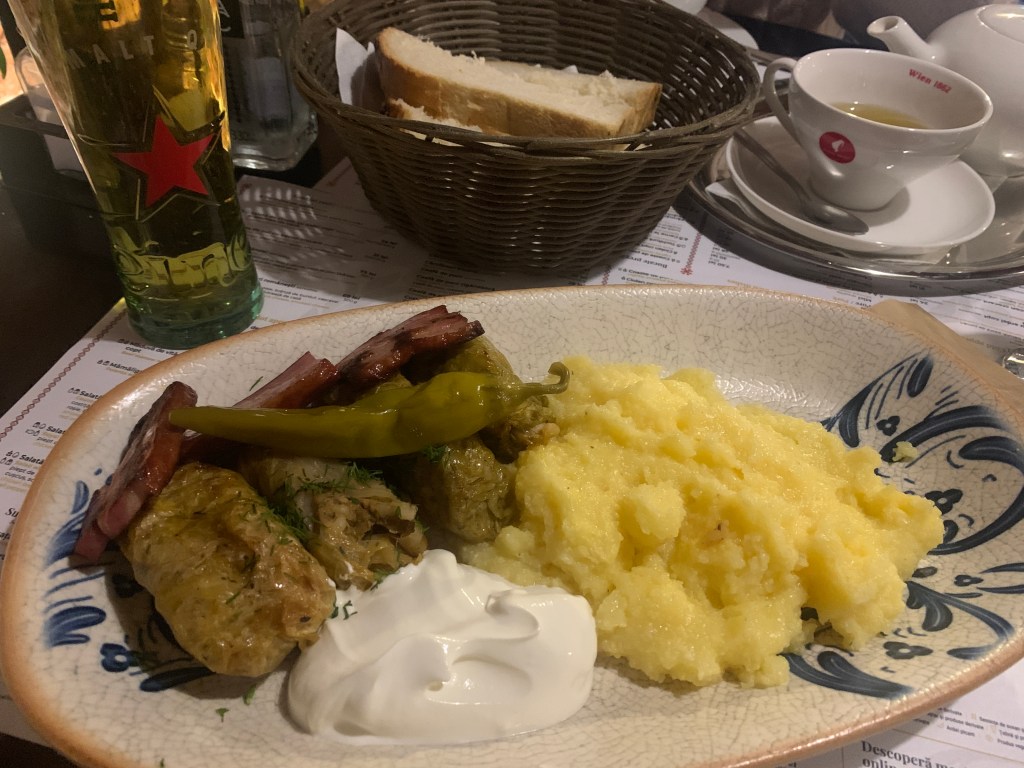
After our walk, we grabbed a traditional Romanian dinner at Berăria 700, a restaurant and beer garden in an old citadel that I have been walking by everyday to get to the city center. It was quite busy, as everyone was out and about celebrating, but luckily we were able to grab a seat. I am committed to trying at least one traditional Romanian meal a week and this week I chose sărmălute cu mămăliguță, costiță, smântână și ardei lute, or cabbage rolls with polenta, bacon, sour cream, and chili peppers. Honestly, the cabbage rolls were a solid 10/10. I ended up being so full that unfortunately, there was no additional room for any papanași.
Our evening activity, once again hosted for us by the Erasmus Student Network, had us make our own mărțișor. They explained the tradition to us, as well as tell the dragon myth, and supplied us with everything we needed to make our own trinket. I will save myself the embarrassment by not providing proof of what I created, but it was a fun attempt at the tradition! Overall, it was a great day immersing myself in the culture and traditions of Romania. O primăveră furmoasă!

 Run. Sip. Serve.
Leave a reply to Gerri Cancel reply