
Lviv’s tagline, “Open to the World,” captures its identity as a city where history and modern life intersect. Shaped by Ukrainian, Polish, Armenian, and Jewish influences, the city carries a layered cultural legacy that is still visible in its architecture, traditions, and daily life. Home to a UNESCO-listed historic center, it is increasingly recognized as a tourism destination that rivals that of Prague and Kraków. At the same time, it manages to balance preservation with progress—feeling deeply rooted in its past while staying connected to the wider world.
That sense of openness isn’t just cultural, it shows up in the experience of getting there, too. Despite the broader challenges facing Ukraine right now, reaching Lviv is more straightforward than many people expect. I was surprised by how smooth the process felt, though it still required more planning and strategy than a typical European city break.
Since the start of the full-scale invasion in 2022, Ukrainian airspace has been closed. Mark and I originally planned to take a FlixBus from Kraków to Lviv, but were advised that bus and car crossings can involve long delays at the border due to security checks. We were also told the train is usually the most efficient option, even though tickets can be harder to get since it’s become the main way to travel within the country. In the end, we decided the train was the most convenient and straightforward way to enter Ukraine.
We also made sure to have all the necessary documents ready for the border, which ended up being an important part of the process. Along with our passports, we brought printed copies of our hotel reservations, a detailed itinerary for the event we were facilitating, and our train tickets both into and out of Ukraine. We also carried proof of health insurance that specifically covered war-related risks, which is something many travelers don’t think about but can be essential in the current context.
It wasn’t until I stepped onto the train that the reality of the trip really set in. As I boarded, a slow, somber piece of music—what sounded like a funeral march to me—played over the loudspeaker. Maybe it was just my interpretation, but it gave the moment a quiet heaviness and made it clear this wouldn’t feel like a typical trip. Looking back on that moment now, what I heard was most likely the national moment of silence for the fallen heroes.
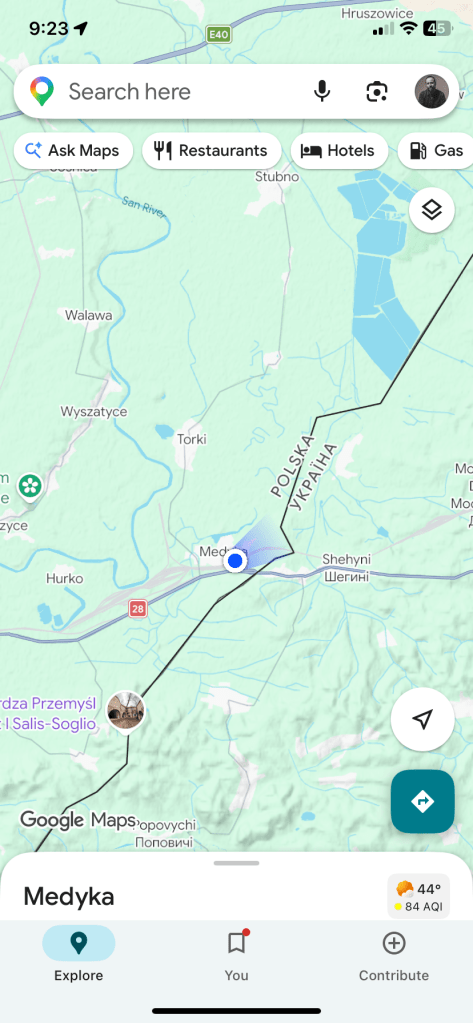
Leaving Przemyśl, we didn’t really know what to expect. I had braced myself for a lot of questions at the border and for someone to go through our documents and ask why we were entering a country at war. Instead, stepping onto the train felt like crossing into the unknown, where the uncertainty was less about logistics and more about what lay ahead.
Watching the Polish countryside slowly give way to the Ukrainian landscape felt surreal. There was a quiet moment of “this is really happening”—a sense that we’d crossed a point of no return and were fully committed to the journey.
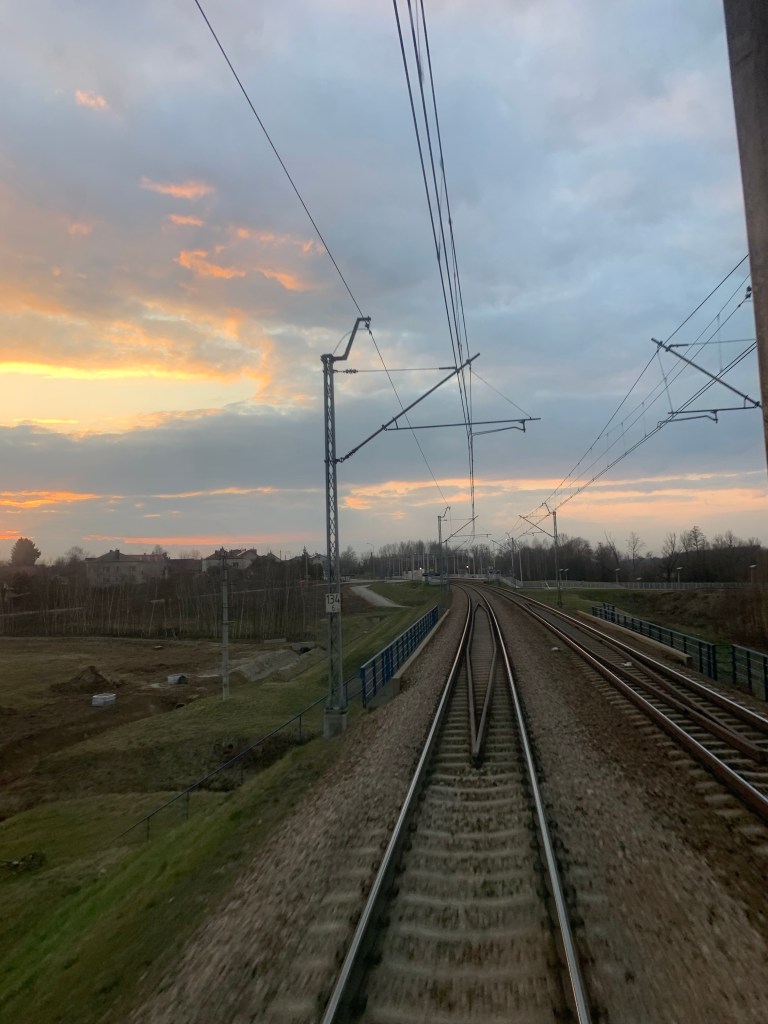
When the train stopped at the border for inspections, I braced myself for a long, drawn-out process. In reality, it was more straightforward than I expected. Mark was asked a few questions about his visit, and his bag was searched, while the officer simply glanced at my passport and moved on. At one point, a search dog made its way through the carriage, which almost diffused the tenseness of the moment. Then, after several minutes, the train started moving again, and just like that, we were on our way.
Looking back, all the planning, uncertainty, and little moments of tension made arriving feel that much more significant. Despite everything going on, Ukraine didn’t feel closed off—it felt very much open. The trains are still running, the border is still crossable if you come prepared, and life is still moving. In that sense, Lviv’s idea of being “open to the world” isn’t just a tagline, it’s something you actually experience. Even now, you can visit, connect with people, and experience the country as it really is, shaped by the lives, resilience, and everyday moments that don’t always make it into the stories told from afar.


Leave a Reply